Reclaimed Water Reuse System

Introduction to Reclaimed Water Reuse System Products
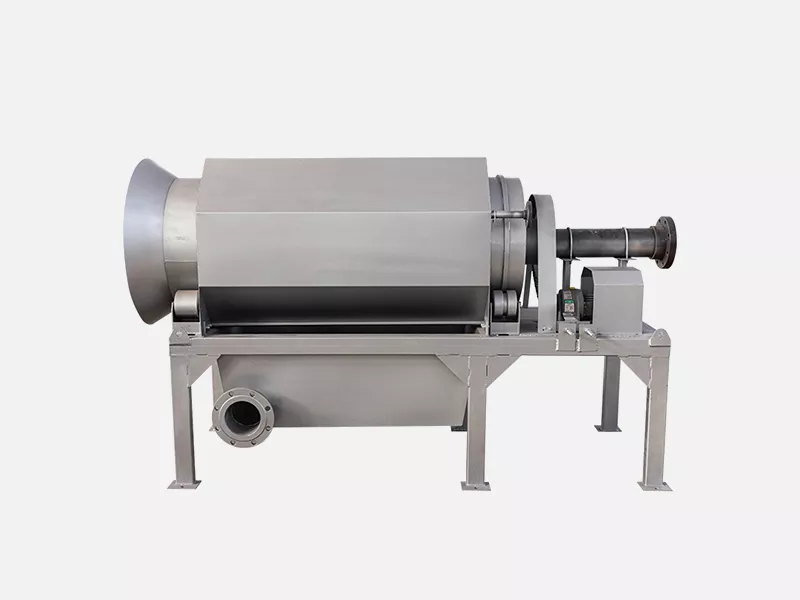
The reclaimed water reuse system is a core process system for realizing wastewater resource recovery and reducing fresh water consumption. Through graded deep purification of domestic sewage and industrial wastewater, the effluent quality reaches the reuse standards for miscellaneous water and production water, and is reused for greening irrigation, toilet flushing, road cleaning, production cooling, process make-up water, and other scenarios. While reducing wastewater discharge, it greatly lowers enterprise water costs, making it a core supporting equipment for green factory and water-saving park construction. Changsha Jing'anlan Environmental Technology can flexibly combine process units such as biochemical treatment, filtration, membrane separation, and disinfection according to raw water quality characteristics and reuse water quality requirements, customizing overall reclaimed water reuse solutions suitable for different industry scenarios, building a complete closed loop of "pollution treatment — reuse — water saving".
System Composition and Process Flow
A typical reclaimed water reuse system consists of four core process units, which can be flexibly tailored according to reuse standards:
The pretreatment unit includes screens, equalization tanks, coagulation sedimentation or air flotation devices, mainly removing large particulate impurities, suspended solids, and some colloids from water, achieving homogenization and equalization of water quality and quantity, and reducing the load on subsequent biochemical and advanced treatment units.
The biochemical treatment unit adopts processes such as biological contact oxidation, A/O, and MBR to degrade organic pollutants, ammonia nitrogen, and other components in water, greatly reducing effluent COD, BOD₅, and ammonia nitrogen indicators. It is the core treatment stage for ensuring reuse water quality.
The advanced treatment unit matches corresponding processes according to reuse grade: miscellaneous-grade reuse mainly uses quartz sand filtration and activated carbon filtration; production-grade reuse adds ultrafiltration to remove colloids, microorganisms, and trace suspended solids; high-standard desalination reuse is equipped with reverse osmosis to remove dissolved salts from water.
The reuse water supply and automatic control unit includes reuse water tanks, variable-frequency water supply pumps, ultraviolet/sodium hypochlorite disinfection devices, and a fully automatic control system, realizing quality-based reuse water supply and unattended system operation, ensuring stable supply pressure and hygienic safety of water use.
Core Technical Advantages
Significant water-saving benefits with clear return on investment. The system reuse rate can reach 60%~85%, converting most wastewater into reusable reclaimed water, greatly reducing fresh tap water intake and wastewater discharge, and effectively lowering enterprise water costs and sewage discharge fees. Equipment investment is typically recovered in 2~4 years, with outstanding long-term economic benefits.
Flexible process combinations for precise matching of needs. The process route can be flexibly configured according to the water quality requirements of the reuse scenario, avoiding excessive investment. Low-cost conventional processes are used for miscellaneous scenarios such as toilet flushing and greening; ultrafiltration processes are used for production cooling and cleaning scenarios; double-membrane processes are used for high-precision production water, controlling investment and operating costs while ensuring compliance.
Full-process automation for simple operation and maintenance. The system is equipped with a PLC + touch screen automatic control system, which can automatically complete the entire process of water level adjustment, chemical dosing, membrane cleaning, and water supply scheduling, and monitor parameters such as reuse water quality, flow rate, and pressure in real time, requiring no dedicated staffing. The modular design facilitates maintenance by unit, with few fault points and convenient servicing.
Standards compliance to support green certification. The system's effluent strictly implements the national standards in the "Urban Sewage Recycling and Reuse" series and the reuse water quality specifications of various industries, with no secondary pollution throughout the process. It can help enterprises complete certifications such as water-saving evaluation, green factory, and Class A environmental protection enterprise, meeting environmental regulatory and water-saving assessment requirements.
Applicable Industries and Scenarios
Municipal and building sector: domestic sewage reuse in residential communities, office buildings, schools, municipal parks, etc., for greening, toilet flushing, road spraying, and landscape water replenishment
Industrial production sector: production wastewater reuse in hardware, electronics, food, printing and dyeing, chemical, and other industries, for cooling water replenishment, cleaning water, and low-grade process water
Centralized park reuse: advanced treatment and reuse of tailwater from centralized sewage treatment plants in industrial parks, providing unified reclaimed water supply for park enterprises
Application in water-scarce areas: water resource recycling in areas with tight water supply, such as water-scarce northern regions, remote scenic areas, and islands
Selection Guide
The core basis for selecting a reclaimed water reuse system is the raw water quality, reuse water volume, reuse water quality standards, and on-site working conditions:
Process route: Miscellaneous-grade reuse is mainly based on "biochemical + filtration + disinfection"; production-grade reuse adds ultrafiltration; production reuse requiring desalination is equipped with reverse osmosis.
Reuse rate design: Conventional projects have a reuse rate of 60%~75%, and zero-discharge supporting scenarios can reach over 85%, which needs to be comprehensively designed in combination with the concentrated water treatment plan.
System form: For small and medium water volumes, integrated skid-mounted equipment is preferred, offering fast installation and a small footprint; for large water volume projects, a civil-construction process layout is adopted, with better operating costs.
Material configuration: Water-contact components can be made of anti-corrosion carbon steel, 304 stainless steel, and other materials, adapting to different corrosion levels of water quality and industry requirements.
The Jing'anlan technical team can provide customized reclaimed water reuse solutions and water-saving benefit calculations based on users' water usage records and water quality testing data, helping enterprises reduce costs and increase efficiency.
Jing'anlan Service Support
Free water quality testing and water-saving assessment, customized reclaimed water reuse process solutions and investment return calculations
A professional team is responsible for the entire process of system design, installation, and commissioning, ensuring stable compliance of reused water quality
Long-term supply of full-category consumables and spare parts such as membrane elements, filter media, chemicals, pumps, and valves
Annual operation and maintenance hosting services for reclaimed water reuse systems are available to ensure long-term efficient operation of the system
Supports integration with zero-discharge, smart water management, and other advanced processes to achieve full-chain water resource management
Product Inquiry
Are you interested in this product? Please contact us.