Microfiltration Equipment (MF)
Microfiltration (MF) Equipment Product Overview
Microfiltration (MF, Microfiltration) equipment is the foundational core equipment of the membrane system series. It is a low-pressure-driven micron-level physical screening device, designed and manufactured in strict accordance with the "CJ/T 169—2018 Microfiltration Water Treatment Equipment" industry standard. It is the most widely used pretreatment and security filtration unit in the entire water treatment process. The equipment uses high-precision microfiltration membrane elements as its separation core. Driven by a low pressure differential of 0.01~0.2MPa, it precisely intercepts sediment, suspended solids, colloids, algae, bacteria, and protozoan cysts with particle sizes of 0.1~10μm in water through uniform membrane pores. The effluent turbidity can be stably reduced to below 0.1NTU, with a silt density index SDI≤3. It can serve as an independent primary water purification unit, or as a pre-protection barrier for advanced treatment processes such as ultrafiltration, nanofiltration, and reverse osmosis, effectively reducing the contamination load on downstream membrane modules and extending the service life of core membrane elements. It is key pre-equipment for cost reduction and efficiency improvement in water treatment systems.
Working Principle
The core separation mechanism of microfiltration is physical screening, and the membrane pore size directly determines the interception precision. Driven by inlet water pressure, water molecules, dissolved salts, and small-molecule organic substances can pass through the membrane pores, while suspended particles, bacteria, colloids, and other substances with particle sizes larger than the membrane pore size are intercepted on the membrane surface. Through regular hydraulic backwashing and combined air-water cleaning, the intercepted contaminants are discharged with the concentrate, achieving continuous recovery of filtration performance. According to the operating mode, it can be divided into two types:
Dead-end filtration: Suitable for working conditions with low suspended solids concentration, featuring high filtration efficiency and low energy consumption. Mostly used for small-scale water purification and terminal security filtration
Cross-flow filtration: Suitable for working conditions with high suspended solids concentration. The concentrate laterally scours the membrane surface to slow down the fouling rate. Mostly used for industrial wastewater and continuous-operation pretreatment systems
Core Technical Advantages
Low pressure and low consumption, economical operating cost. As a typical low-pressure membrane process, the conventional operating pressure is only 0.01~0.2MPa, and the driving energy consumption is far lower than high-pressure membrane processes such as reverse osmosis and nanofiltration. No high-pressure pump unit is required, resulting in low system installed power and significant long-term electricity cost advantages. It also does not require continuous large-scale dosing of chemical agents, keeping operation and maintenance consumable costs controllable.
Precise interception, stable effluent quality. The membrane pore size is uniform and controllable, with a removal rate of over 99% for suspended solids and bacteria. Membrane elements with 0.2μm precision can achieve a bacterial interception rate of 99.9999%. The effluent turbidity is stably ≤0.1NTU, and the SDI value is stably below 3, fully meeting the inlet water quality requirements of reverse osmosis systems. It can increase downstream reverse osmosis water production by 15%~25% and extend the cleaning cycle and service life of membrane elements.
Rich material options, strong working condition adaptability. Multiple membrane material options are available to suit different water quality scenarios: PP polypropylene material is used for conventional water treatment, featuring low cost and high flux; PVDF polyvinylidene fluoride material is used for corrosive/industrial wastewater conditions, featuring acid and alkali resistance, fouling resistance, and long service life; PES polyethersulfone material is used for food and pharmaceutical hygiene-grade conditions, featuring no leaching and easy sterilization; inorganic ceramic membrane material is used for high-temperature and highly corrosive special conditions.
Modular integration with flexible expansion: Standardized column membrane modules and skid-mounted frame design allow flexible assembly and expansion based on treatment capacity, with a single system covering a capacity range from 1m³/h to several hundred m³/h. The equipment has a compact footprint and a high degree of factory prefabrication, enabling short on-site installation periods. It can be quickly integrated with existing water treatment processes without large-scale civil construction modifications.
Applicable Industries and Scenarios
Membrane process pre-treatment: As a security filtration unit for reverse osmosis (RO), ultrafiltration (UF), and nanofiltration (NF) systems, it intercepts large particulate impurities to prevent membrane fiber damage and clogging. It is a standard pre-treatment process for pure water production and reclaimed water reuse systems.
Municipal and civil water supply treatment: Replaces traditional quartz sand filtration processes to treat surface water and groundwater, removing sediment, suspended solids, bacteria, and algae to enhance the biological safety of treated water.
Industrial production water purification: Suitable for primary purification of production water in electronics, food, pharmaceuticals, coating, boiler make-up water, and other industries, meeting process influent requirements for suspended solids and turbidity.
Advanced wastewater treatment and reclaimed water reuse: Connects to biochemical system effluent for terminal advanced filtration, further reducing effluent SS and turbidity. Suitable for industrial park and enterprise reclaimed water reuse projects.
Specialized industry material filtration: Applicable to industrial material separation scenarios such as food and beverage clarification, pharmaceutical sterilization, and chemical liquid filtration.
Selection Guide
Microfiltration equipment requires customized selection based on influent water quality, treatment capacity, effluent standards, and on-site conditions. Core selection criteria include:
Filtration precision: Select pore size specifications such as 0.1μm, 0.2μm, 0.45μm, 1μm, 5μm, etc., based on the target intercepted particle size.
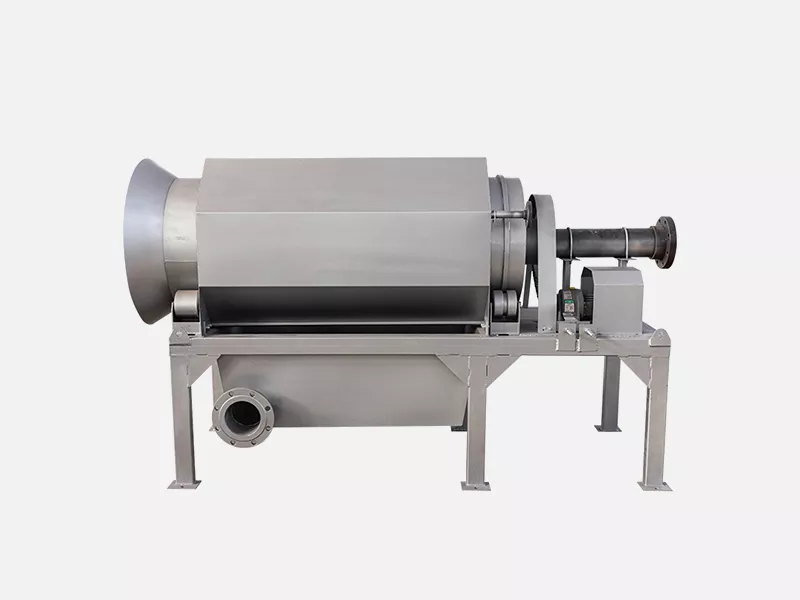
Component Type: Low-concentration influent can use column-type pressure components; high-suspended-solids, high-flow conditions can use submerged or rotary drum microfiltration equipment
Membrane Material: Match the appropriate membrane material based on influent pH, corrosiveness, temperature, and hygiene requirements
Operation Mode: Select dead-end filtration or cross-flow filtration mode based on influent suspended solids concentration
Material Configuration: Frames and piping can be made of anti-corrosion carbon steel, 304/316 stainless steel, and other materials to suit different corrosion-level conditions
The Jing'anlan Environmental Technology team can provide a customized selection plan and system configuration list based on the water quality test report and treatment requirements provided by the user, ensuring the equipment matches the working conditions and consistently meets standards.
Jing'anlan Service Support
Free water quality testing and process assessment, with tailor-made microfiltration system configuration and piping design solutions
Professional technical team conducts on-site survey and installation, guiding equipment commissioning throughout to ensure the system meets standards on the first startup
Full range of consumables including membrane elements, cleaning chemicals, and spare parts are supplied to establish long-term operation and maintenance support
Can integrate the full chain of processes including reclaimed water reuse, zero discharge, and biochemical treatment, providing one-stop EPC+O water environment treatment services
Providing annual operation and maintenance hosting services, with regular inspections, cleaning, and performance testing to ensure long-term stable operation of equipment
Product Inquiry
Are you interested in this product? Please contact us.