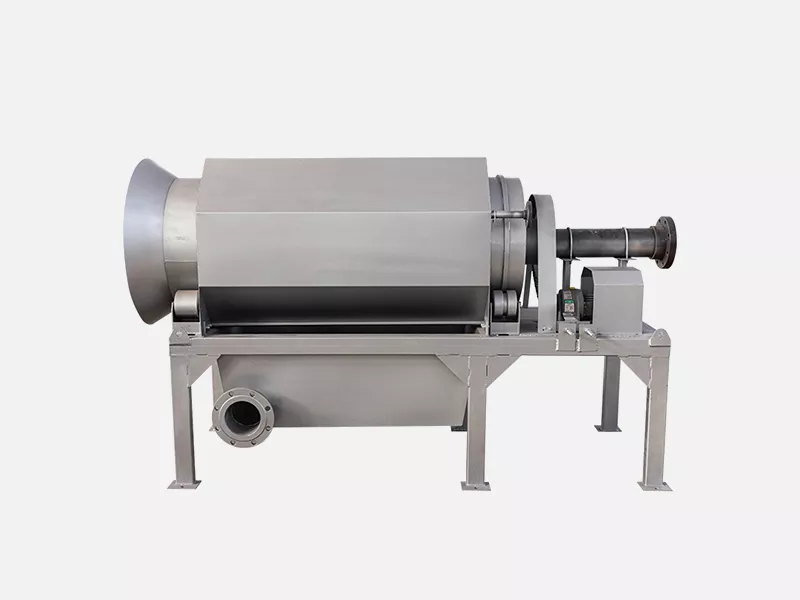
Electrodialysis ED Equipment

Electrodialysis (ED) Equipment Product Introduction
Electrodialysis (ED) is a membrane separation process based on the selective permeability of ion exchange membranes. Driven by a DC electric field, it achieves directional migration of ions in water, thereby desalinating, concentrating, and refining solutions. Jing'anlan electrodialysis equipment uses high-quality homogeneous ion exchange membranes and a dedicated power supply system. It can be widely used in brackish water desalination, industrial wastewater desalination, salt solution concentration, acid and alkali recovery, and other scenarios. With features such as low energy consumption, stable operation, and no phase change, it is one of the core process equipment in the field of salt separation.
Working Principle
The interior of an electrodialyzer consists of numerous alternately arranged cation membranes, anion membranes, and spacers, forming dilute chambers and concentrate chambers. After raw water enters each compartment, under the action of a DC electric field, cations in the water migrate toward the cathode and anions migrate toward the anode. Cation membranes only allow cations to pass through, while anion membranes only allow anions to pass through, so ions in the dilute chambers continuously migrate to the concentrate chambers, achieving desalination in the dilute chambers and salt concentration in the concentrate chambers. The BMED process combined with bipolar membranes can also directly convert salt solutions into corresponding acids and bases, enabling resource utilization of salts.
Core Technical Advantages
Flexible desalination and concentration with strong adaptability. The desalination rate can be flexibly adjusted according to requirements, with the desalination rate controllable within the range of 30%~95%, while simultaneously achieving multiple-fold increase in salt concentration on the concentrate side. Compared with reverse osmosis, it can treat feedwater with higher salinity and is suitable for desalination and concentration needs of medium- and high-salinity wastewater.
Low operating energy consumption and economical treatment cost. Driven purely by a physical electric field with no phase change process, the energy consumption per ton of water desalination is lower than that of reverse osmosis and evaporation processes. It is especially suitable for desalination of large-volume, medium-salinity water bodies. Membrane elements have a long service life and low chemical consumption, offering significant long-term operating cost advantages.
Excellent anti-fouling performance and long service life. The surface of ion exchange membranes is smooth, making it difficult for pollutants to deposit, and they can withstand relatively high concentrations of organic matter and suspended solids. Cleaning and regeneration are convenient. Under normal operating conditions, the membrane stack service life can reach 5~8 years, and the overall equipment is highly durable.
Strong process scalability enabling resource recovery. Conventional ED can achieve salt concentration and water desalination. Upgraded bipolar membrane electrodialysis (BMED) can directly produce acids and bases from salt solutions, enabling resource recovery and utilization of waste salts and greatly improving the environmental and economic benefits of projects.
Applicable Industries and Scenarios
Brackish Water Desalination: Desalination of drinking water and process water in inland saline-alkali areas and coastal brackish water areas
Industrial Wastewater Desalination: Desalination of medium-salinity wastewater from chemical, printing & dyeing, food and other industries to achieve compliant discharge or reuse
Salt Solution Concentration: Concentration and purification of salt solutions and liquid materials in food, pharmaceutical and chemical industries
Acid & Alkali Recovery: Bipolar membrane process for treating saline wastewater, recovering corresponding acids and alkalis for reuse in production processes
Pure Water Preparation: Used as pre-desalination process ahead of reverse osmosis to reduce RO load and improve system recovery rate
Selection Guide
The core basis for selecting electrodialysis equipment is the influent salinity, treatment capacity, desalination rate requirements and application scenario:
Membrane Stack Type: Standard homogeneous membrane electrodialysis for conventional desalination and concentration; bipolar membrane electrodialysis for acid & alkali recovery
Membrane Stack Stages: Select single-stage, two-stage or multi-stage electrodialysis process based on desalination rate requirements
System Configuration: Standard rectifier power supply, electrode system and automatic control system; pretreatment and cleaning systems available as needed
Material Configuration: Separators and electrodes can be made of different materials such as titanium-coated ruthenium and stainless steel, adapting to different corrosive working conditions
The Jing'anlan technical team can customize the optimal electrodialysis process solution based on the user's water quality and treatment goals, balancing treatment effectiveness and operating economy.
Jing'anlan Service Support
Free water quality testing and process evaluation, customized electrodialysis system configuration solutions
Professional team on-site installation and commissioning, ensuring stable desalination results that meet standards
Supply of supporting core components such as ion exchange membranes, electrodes, and power supplies
Full-process solutions for desalination, concentration, and resource recovery
Provide operation and maintenance training and regular maintenance services to ensure long-term stable operation of the system
Product Inquiry
Are you interested in this product? Please contact us.