Decolorizing Agent
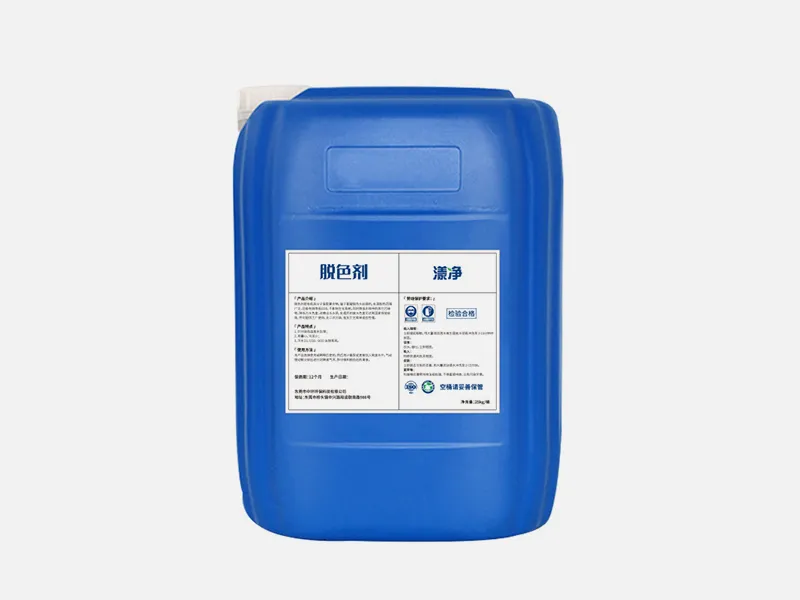
Decolorant Product Introduction
In wastewater treatment for textile printing and dyeing, papermaking, chemical, and other industries, are you often troubled by these problems: effluent color never meets standards, environmental inspections repeatedly fail, and you even face production restrictions and fines; after changing dyes or adjusting processes, traditional PAC and PAM decolorization performance drops sharply, and repeated adjustments cannot suppress the color; to meet standards you overdose chemicals, causing sludge output to surge and dewatering and hazardous waste disposal costs to multiply; you want to advance reclaimed water reuse to reduce costs, but because color cannot be reduced, the reuse plan cannot be implemented. This high-efficiency decolorant, developed by Jing'anlan Environmental Technology specifically for advanced treatment of high-color wastewater, uses quaternary ammonium cationic polymer as its main component. Its molecular chain carries high-density active cationic groups and directly destroys the chromophoric and auxochromic structures of dye molecules through triple actions of charge neutralization, adsorption bridging, and group reaction, while flocculating and settling colored colloids and suspended impurities in water. Unlike traditional inorganic chemicals that rely only on shallow flocculation entrainment for decolorization, this product can remove water color at the source. It has excellent decolorization effects on various water-soluble dyes such as reactive, acid, disperse, and direct dyes, and also removes COD and suspended solids synergistically. It is a cost-effective solution for solving excessive color and improving effluent quality.
Core Value and Product Advantages
1. Deep Decolorization, Stable Compliance Guaranteed
Unlike traditional coagulants that can only remove some suspended colored substances, this product can directly destroy the chromophoric groups of dye molecules and degrade color at the source. Its color removal rate for printing and dyeing and dye production wastewater can reach 90%-98%. After treatment, the effluent is clear and transparent. It not only stably meets various discharge standards, but also adapts to color pretreatment requirements before reclaimed water reuse, thoroughly solving the risk of exceeding standards caused by color fluctuations.
2. Wide Dye Compatibility, No Need to Change Chemicals When Changing Materials
It covers most mainstream dye types such as reactive, acid, disperse, direct, cationic, and sulfur dyes, and adapts to most production processes and water quality scenarios in textile printing and dyeing. Even if production frequently changes materials and influent water quality fluctuates greatly, there is no need to frequently change chemical types, reducing chemical inventory and on-site debugging costs and making operation and maintenance management easier.
3. Significantly Reduced Sludge, Lower Hidden Operating Costs
Many factories only focus on the unit purchase price of chemicals, but overlook that sludge disposal is the largest long-term hidden expense. Jing'anlan decolorant is an organic polymer chemical. Under the same decolorization effect, its dosage is far lower than inorganic coagulants, and the sludge produced is reduced by more than 30% compared with traditional PAC processes. The flocs are dense and have good dewatering performance, which can simultaneously reduce the consumption of dewatering chemicals such as PAM, significantly reducing sludge transportation and hazardous waste disposal costs. Overall operating costs are more advantageous.
4. Fast Reaction, Improved System Treatment Efficiency
After dosing, it reacts quickly with colored substances in the water, forming large and dense flocs within minutes, with fast settling speed and high solid-liquid separation efficiency, without extending the original treatment cycle. It can be directly adapted to existing coagulation, air flotation and other processes, quickly improving system treatment capacity and effluent standards without adding new reaction tanks or equipment.
5. Multi-effect in one dose, reducing the load on subsequent processes
While decolorizing, it can simultaneously remove part of the COD, suspended solids and colloidal substances in the water, effectively reducing the organic load on subsequent biochemical or advanced treatment units, helping to improve overall effluent indicators and reduce the operating pressure and chemical consumption of subsequent processes.
Applicable Industries and Scenarios
Textile printing and dyeing, bleaching and dyeing, and dye production enterprises: decolorization treatment of various dyeing wastewater and rinsing wastewater, ensuring stable compliance of effluent colority
Paper making and pulping industry: decolorization and upgrading of mid-stage wastewater and pulping wastewater, reducing effluent colority and organic load
Coking, pharmaceutical, and leather industries: decolorization treatment of high-colority industrial wastewater, improving effluent water quality
Ink, pigment, and food processing industries: decolorization and pretreatment of colored production wastewater
Municipal wastewater treatment plants and industrial park wastewater treatment stations: advanced decolorization and upgrading, pretreatment before reclaimed water reuse
Usage Recommendations and Model Selection Instructions
Wastewater from different industries and different dye types varies greatly in color intensity and has complex composition, so there is no universal solution that works for everything. Blind dosing can easily lead to wasted costs or insufficient results. Jing'anlan Environmental Technology recommends first conducting a beaker jar test to determine the optimal model and dosage. General usage reference: dilute this product 10-40 times with clean water, then add it directly to the reaction tank and stir thoroughly. The suitable pH range for wastewater is 6-10. For acidic or alkaline water, it is recommended to adjust to near neutral first for better decolorization results. The conventional dosage is 50-500 ppm. For high-color, high-concentration wastewater, the dosage can be appropriately increased based on jar test results. It can be used in combination with polyaluminum chloride (PAC) and polyacrylamide (PAM) to optimize treatment results and costs. When used together, it is recommended to add the decolorizing agent first for full reaction, then add the inorganic coagulant and coagulant aid.
Jing'anlan Service Support
We not only supply decolorizing agents, but also provide one-stop wastewater decolorization solutions.
Free water sample testing and beaker jar tests, with technical engineers customizing a dedicated dosing plan based on your wastewater quality and accurately calculating the cost per ton of water treatment.
On-site technical commissioning service to assist with optimizing dosing points and operating parameters on site, quickly achieving stable compliance for color intensity.
Sufficient production capacity and nearby warehousing to ensure both routine and emergency supply needs, with timely response that does not delay production.
Custom formulations can be developed for special hard-to-decolorize wastewater to solve difficult colored wastewater treatment challenges.
If you are troubled by excessive color, large sludge volume, and persistently high treatment costs, you can contact Jing'anlan Environmental Technology for free water sample testing service, and we will match you with a cost-effective decolorization treatment solution.
Product Inquiry
Are you interested in this product? Please contact us.